
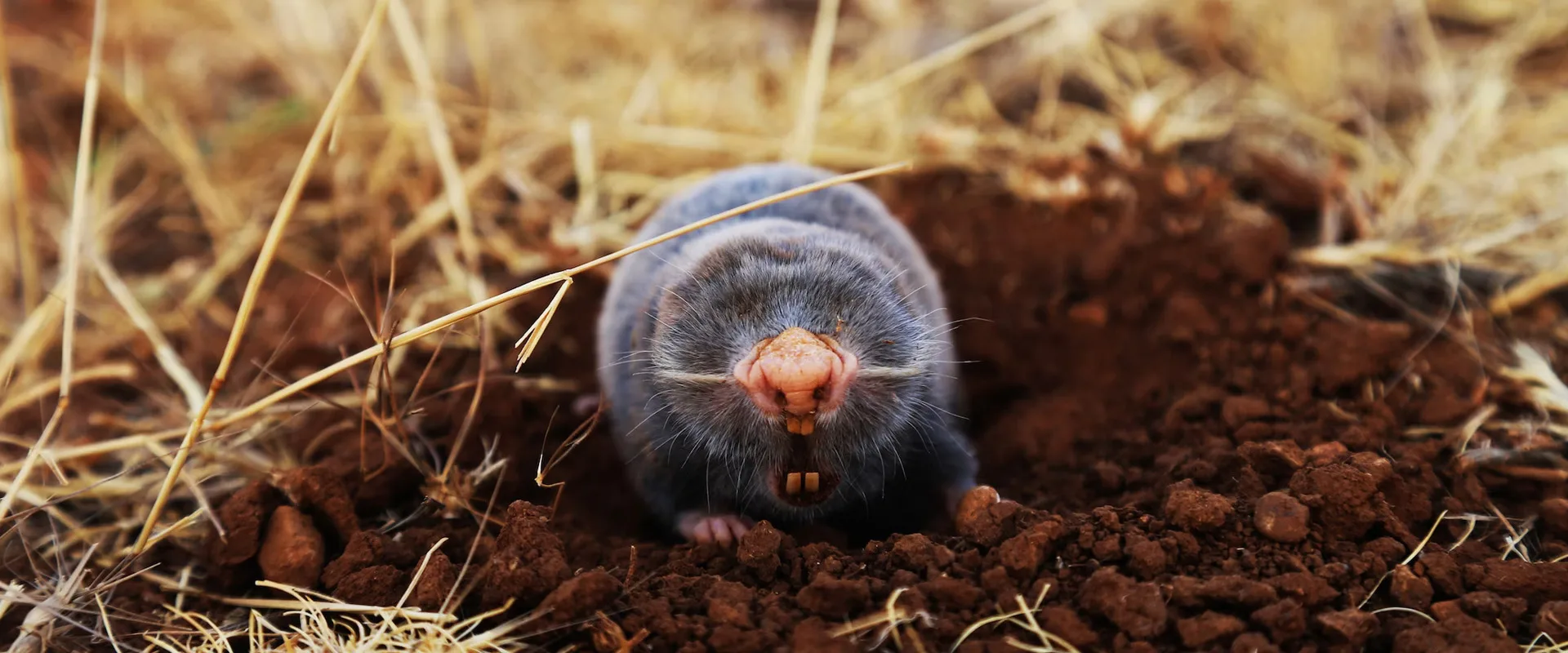
Moles are built to disappear. Their narrow bodies, shovel like forelimbs, and velvety fur that lies flat in either direction let them slip through tight soil with little resistance. Underground is where they eat, travel, and rest, which means most homeowners will never see the animals that are causing the ridges and mounds on their lawn. When a mole does appear topside it feels significant, but surface sightings are the exception, not the rule. Knowing when and why moles surface can help you interpret what is happening below your feet and choose the right response for your yard.
Subterranean by Design
The safest and most efficient way for a mole to meet its high daily energy needs is to stay underground where earthworms and larvae are concentrated. Shallow feeding runs meander just below the surface, while deeper travel tunnels act like highways that connect the territory. This network allows moles to forage every few hours without exposing themselves to hawks, owls, foxes, pets, or extreme temperatures. Because the underground system works so well, surfacing is uncommon during routine life.
Common Reasons Moles Surface
Seasonal dispersal is one reason. In early spring, mature males may cross hardscapes or dry sections to locate receptive females, and juveniles leave the natal area later to establish their own territories, occasionally popping up as they navigate obstacles. Severe weather is another driver. Heavy rains that flood shallow tunnels can force a mole to higher ground temporarily while it rebuilds safe passageways. Human disturbance also matters. Deep tilling, excavation, or heavy foot traffic that collapses tunnels may push an animal to the surface until it can reconnect routes.
How Often Does It Happen?
Compared to the daily evidence of fresh ridges and mounds, direct sightings are rare. Many homeowners never see a live mole even during active infestations. Counting animals based on surface appearances will always underestimate the problem because one mole can create dozens of feet of new tunnel in a day without ever breaking the surface. Use behavioral signs in the turf instead of waiting for a visual.
What Surface Sightings Mean for Your Lawn
If you do see a mole, treat it as a sign that underground activity is intense or disrupted, not as proof that the animal is leaving. The real question is whether feeding tunnels are being rebuilt each night. Flatten a short section at dusk and check it at dawn. Rebuilt ridges mean that runway is active and that the mole is still working the same zone. That is your cue to act rather than wait.
Best Response
Because surfacing is infrequent and brief, effective control targets the behavior that happens constantly underground. Professionals map primary runways, set traps at the correct depth and angle, and monitor them over several days. After removal, they recommend moisture management and turf practices that reduce chronic worm concentrations near the surface. Repellents and sonic stakes may shift activity for a few days, but they rarely stop a hungry animal with a full pantry beneath your lawn.
Takeaway
Moles almost never come above ground during routine life. When they do, it is usually due to mating, dispersal, flooding, or disturbance. Focus on the nightly rebuilding of ridges to confirm activity, and use professional trapping and prevention from Animal Remover to stop the damage where it starts.