

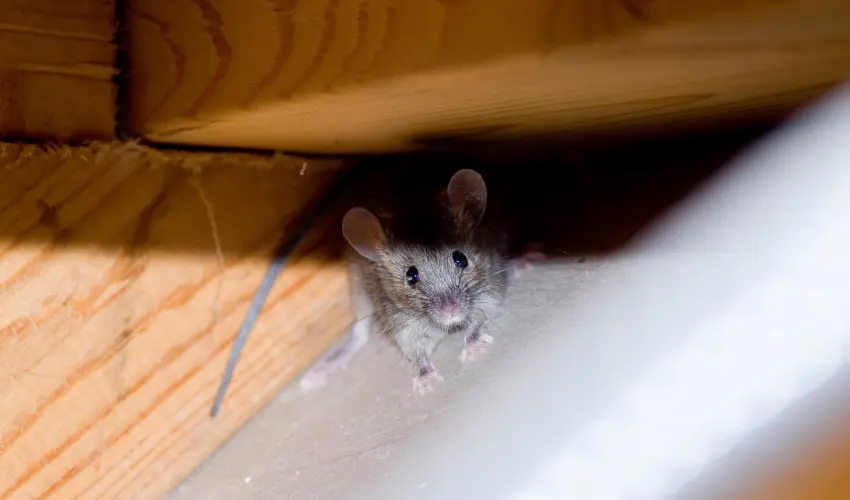
Mice are small, flexible, and cautious, which makes them excellent at disappearing inside homes. They can compress their bodies to squeeze through gaps as small as a dime and prefer areas that provide warmth, darkness, and quick routes to food. Once indoors, mice set up a network of runways and nesting pockets that keeps them hidden during the day and active at night. Because they are quiet and secretive, the first visible clues are usually droppings, gnaw marks, or a musky odor rather than the animals themselves. Learning the most common hiding places helps you detect infestations early and target the areas that matter most for removal and prevention.
Attics and Basements
Attics offer mice insulation for nesting, minimal disturbance, and warm rising air from the living space below. Look for tunneling in fiberglass batts, shredded paper or fabric, and dark trails across joists. Basements provide the opposite climate but similar privacy, especially along sill plates, behind stored boxes, and near utility penetrations. Floor drains, loose window wells, and foundation cracks often serve as entry points. Because these areas are visited infrequently, small populations can grow into established colonies before anyone notices, which is why routine inspections with a flashlight are essential.
Inside Walls and Crawlspaces
Wall voids give mice protected highways through the house. Openings around plumbing, electrical conduits, and HVAC lines connect kitchens, bathrooms, and utility rooms behind the scenes. You may hear scratching or soft squeaks at night, particularly along baseboards or near appliances. Crawlspaces are attractive when ductwork and pipes provide warmth and when ventilation screens are missing or damaged. Insulation in these spaces becomes nest material and urine odor can wick upward into the living areas. Sealing holes with steel wool and caulk, then covering with galvanized hardware cloth, blocks these interior thoroughfares.
Kitchens and Pantries
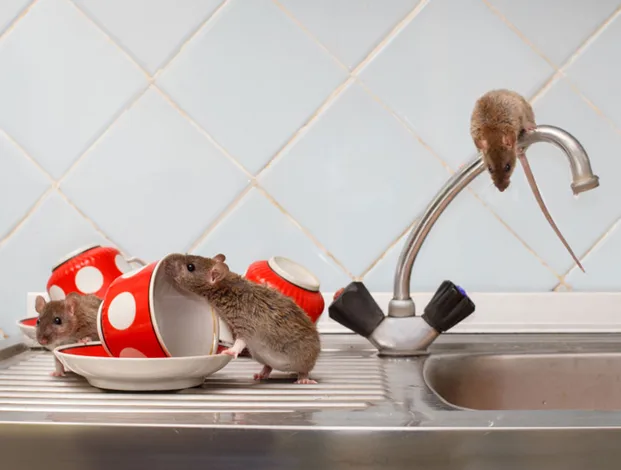
Mice feed several times per night and prefer to hide close to pantries and food preparation areas. Common harborage points include gaps under and behind stoves and dishwashers, voids beneath sink cabinets where plumbing enters the wall, and toe kicks along base cabinets. In pantries, they exploit small openings around shelves or follow gaps where trim meets drywall. They chew through paper, cardboard, and thin plastic to reach cereals, rice, and pet food. Signs include gnaw marks on packaging, small black droppings along edges, and a smear of dark grease along frequently used runways. Storing food in airtight containers and installing door sweeps and kick plate seals reduces access dramatically.
Garages, Sheds, and Utility Areas
Attached garages and nearby sheds are gateways into the home. Weatherstripping gaps along the bottom corners of overhead doors and unsealed conduit penetrations are common entry points. Cluttered shelving with fabric, paper, or lawn seed gives mice cover and nesting material. Water heaters, furnaces, and laundry rooms provide warmth and quiet. Coil hoses, stack wood off the floor, and keep storage elevated to reduce shelter. Sealing utility penetrations with fire rated sealants or escutcheons is a simple but powerful deterrent.
Bedrooms, Closets, and Furniture
Although less common than kitchens and utility rooms, bedrooms and closets become hiding places when food is present or when clutter provides dense cover. Drawers that hold snacks, closets with stored fabric, or the space under dressers can attract nocturnal visits. Sofas and recliners may conceal droppings in fabric folds. If you hear nighttime movement in these rooms, check along baseboards, under furniture, and inside seldom used storage bins. Reducing clutter and vacuuming along edges helps expose activity quickly.
How to Confirm Activity
Use a bright flashlight to scan for pepper sized droppings, silver dollar sized urine stains under UV light, and fine gnaw marks on wood or plastic. Talcum powder or unscented chalk can lightly dust suspected runways to reveal footprints. Snap traps placed perpendicular to wall edges, with the trigger against the wall, intersect nightly patrol routes. For safety and effectiveness, avoid scattering poison baits in living areas, since they can cause odor issues and secondary hazards to pets. Targeted trapping combined with sealing entry points produces faster results.
Professional Removal and Exclusion
Because mice reproduce rapidly and hide well, professional help shortens the timeline from discovery to full resolution. A licensed team will map runways, set and monitor traps, remove nests, and sanitize contaminated areas to lower disease risks. The lasting fix is exclusion, which means sealing every gap larger than a pencil with chew resistant materials and reinforcing vulnerable transitions such as garage door seals, utility penetrations, and foundation vents. Animal Remover specializes in comprehensive mouse control that combines removal, cleanup, and structural sealing so you do not fight the same hidden population again in a few weeks.
Next Steps
If you suspect mice, start with a top to bottom inspection focusing on attics, basements, wall penetrations, and kitchen voids. Reduce food access, declutter storage zones, and install a few well placed traps along walls where droppings appear. For a permanent solution, schedule a professional inspection to identify every entry point and build a customized exclusion plan. With the right strategy, even the most elusive hiding places stop being a problem.