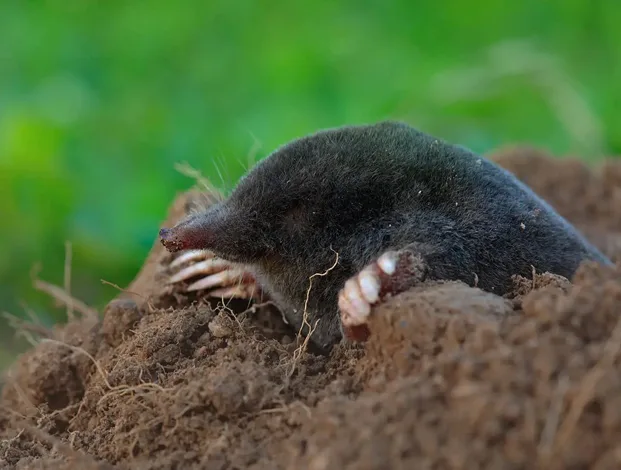
Moles are subterranean specialists that thrive anywhere the soil is soft, moist, and rich in earthworms and insects. When they discover a yard that checks all three boxes, they build a labyrinth of tunnels that lets them feed around the clock while staying hidden from predators. It is natural to hope they will leave once they sample your property, but in most cases a yard that is good for moles today will be good for moles tomorrow. Waiting for them to disappear often means more ridges, more mounds, and a lawn that is harder and more expensive to fix later. Understanding why moles stay, when they sometimes shift territory, and what actually solves the problem will help you choose the fastest way to restore your turf.
Why Moles Settle In
A mole’s metabolism is high, so it must eat frequently. Healthy lawns with consistent irrigation and deep organic matter tend to support large earthworm populations. That is a built in food supply that renews every day. Once a mole claims the area, it maintains shallow feeding runs just under the surface and deeper travel tunnels that connect safe zones. Those shallow runs are what create the squishy ridges underfoot and the streaks of wilted turf where roots have been separated from soil. Because the animal gets everything it needs without surfacing, there is no pressure to leave on its own.
Do They Ever Move On?
Yes, but not often and not for long. Moles may shift to new sections of a yard after flooding, after heavy disturbance from construction or aggressive tilling, or when extreme drought drives prey deeper. Seasonal changes also alter tunnel depth, with activity moving downward in long cold snaps and coming back up when the soil warms. In rare cases where a property becomes chronically dry and compacted or where insect biomass drops dramatically, a mole could abandon a portion of the lawn. Most residential landscapes rebound quickly, and abandoned tunnels act like prefabricated highways for the next hungry mole that wanders in.
How to Tell if the Mole Is Still There
The simplest test is a reset check. In the evening, flatten a 2 to 3 foot section of an active ridge. Check again early the next morning. If the ridge is rebuilt, that runway is in use. Fresh mounds of loose soil, new ridges that branch or connect, and turf that yellows in narrow lines are additional signs of ongoing feeding. If you keep seeing new disturbance each week, the animal is still present even if you never catch a glimpse of it above ground.
Why Repellents and Gadgets Disappoint
Castor oil granules, scented stakes, and sonic devices can sometimes nudge activity from one bed to another, but a hungry mole that needs worms every few hours usually pushes through mild annoyances. Poison baits may be ignored when natural prey is abundant and can pose risks to pets. The result is often weeks lost while tunnels multiply. The approach that consistently stops damage is to remove the individual using the active runways on your property.
What Works Long Term
Professional trapping targets the exact routes a mole travels most. A trained specialist will map the network, identify primary runways, and place proven traps at precise depth and orientation. After removal, prevention focuses on water management, thatch reduction, and soil conditions that discourage chronic worm concentrations near the surface. If grub pressure is unusually high, a timed treatment may be recommended, but only as part of a broader plan that addresses habitat as well as the animal. This integrated approach prevents the revolving door effect where new moles replace old ones.
Next Steps
If you see fresh ridges or mounds each week, waiting rarely helps. Restore your lawn faster with a targeted plan. Animal Remover provides humane trapping, expert tunnel mapping, and long term prevention that keeps moles from turning your yard into a permanent feeding ground.