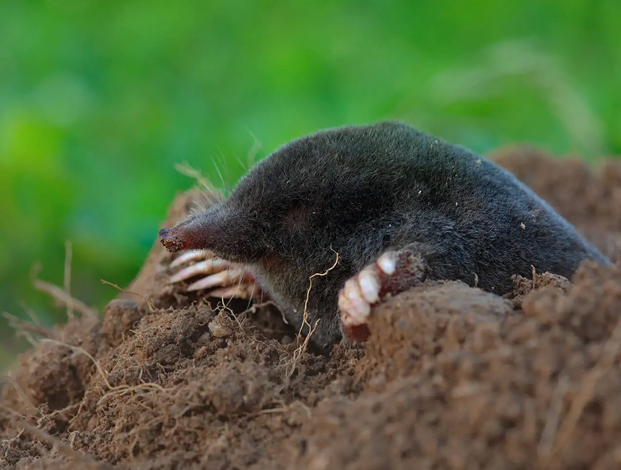
Ask any turf professional what drives mole damage and you will hear the same answer every time. It is the animal’s appetite. Moles have a rapid metabolism and must eat frequently to survive, which means they spend most waking hours pushing through soil to intercept prey. Their diet is dominated by earthworms, but they also take grubs, beetle larvae, and other soil invertebrates when available. Understanding how often moles eat, how much they consume, and how their foraging cycles work explains why damage can appear so quickly across a lawn.
Moles typically feed every few hours, day and night. Rather than stockpiling food, they harvest prey as they travel, using shallow runs to comb the top few inches of soil where worms and larvae are most active. Because their digestive systems process food quickly, long gaps between meals are risky. In cooler months, they shift deeper to follow worms below the frost line, but the feeding rhythm continues. That constant search is why new ridges appear even when you have flattened yesterday’s.
Exact intake varies by species, size, and season, but many studies and field observations suggest a mole may consume a large fraction of its body weight in prey over a day. That need for calories drives tunnel expansion. The more pathways a mole creates, the more worm traffic it can intercept. In a well watered lawn rich in organic matter, that can translate into dozens of feet of fresh run per day as the animal optimizes routes to reliable food zones.
As moles push through the root zone, they separate turf from the soil, which disrupts moisture exchange and nutrient uptake. The result is spongy ground, wilting strips of grass, and soil mounds where deeper excavation pushes material to the surface. Even a single mole can undermine a large area in a short period because its need to eat often keeps it moving. If conditions remain ideal, the animal will continue to revisit productive corridors, rebuilding ridges each night.
Repellents and sonic stakes may scatter activity temporarily, but a yard full of worms is hard for a hungry mole to ignore. Poison baits can be risky around pets and are often less attractive than abundant natural prey. Without removing the animal that is doing the feeding, results tend to be short lived.
Professional trapping meets the problem where it lives. By identifying primary runways and placing traps at the correct depth and alignment, specialists intercept the mole during routine feeding passes. Follow up focuses on prevention, including dialing back chronic overwatering, improving drainage, reducing excessive thatch, and addressing grub populations only when thresholds justify it. This combination reduces the likelihood that a new mole will find the same buffet conditions that attracted the last one.
If you flatten ridges today and find them rebuilt tomorrow, you have an active feeder on site. Do not wait for the animal to slow down on its own. Bring in experts who can stop the nightly foraging and help you adjust conditions that invite a repeat. Animal Remover provides humane, targeted mole removal and long term prevention so your lawn can recover and stay protected.

 Animal Remover Wildlife Management and Pest Control