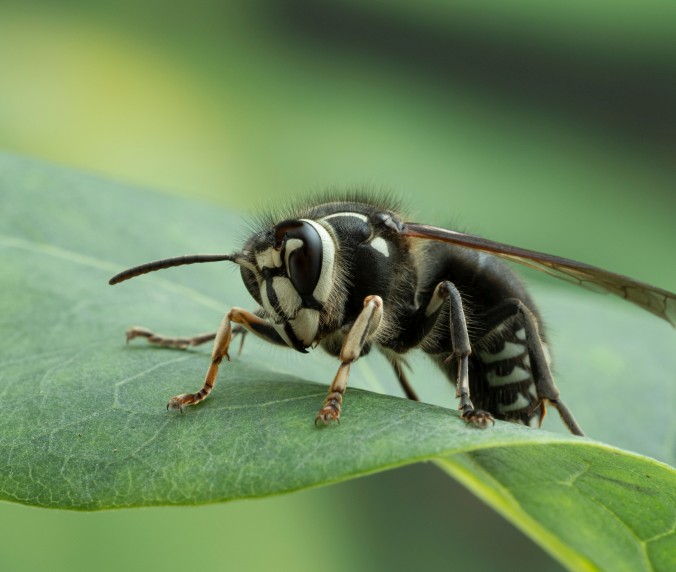
When a bald-faced hornet nest appears on your property, it can quickly become a serious safety concern. These large black-and-white stinging insects are known for building gray paper nests in trees, shrubs, rooflines, eaves, and on the sides of homes and businesses. As the nest grows, the colony becomes more active, more visible, and more defensive.
Animal Remover provides fast bald-faced hornet nest removal in Cincinnati and surrounding areas. We remove hornet nests from trees, homes, businesses, garages, sheds, barns, rooflines, soffits, eaves, commercial buildings, and other hard-to-reach areas.
If you have a large gray hornet nest on your property, call Animal Remover at 513-324-9453.
No nest is too high. No job is too big or too small.
Speed matters when you have an active bald-faced hornet nest near people, pets, customers, employees, children, doors, decks, patios, pools, walkways, playgrounds, or outdoor work areas.
Bald-faced hornets can become defensive when their nest is disturbed. A mower, ladder, tree trimming project, landscaping work, child playing nearby, dog running through the yard, or someone walking too close to the nest can trigger activity.
Animal Remover responds quickly to bald-faced hornet calls because these nests can create an immediate safety issue. Whether the nest is low in a bush, high in a tree, hidden in foliage, or hanging from the side of a structure, we can help.
Call 513-324-9453 for fast bald-faced hornet nest removal in Cincinnati and surrounding areas.
Bald-faced hornets are large black-and-white wasps. Even though they are commonly called hornets, they are closely related to yellow jackets and are often described as an aerial yellow jacket. Most property owners simply know them as large, aggressive-looking hornets with a gray paper nest.
They are larger than most yellow jackets and are usually easy to recognize because of their size, black body, and white markings on the face and body.
Bald-faced hornets are social insects. That means they live in a colony with a queen, workers, developing young, and a nest that grows throughout the season.
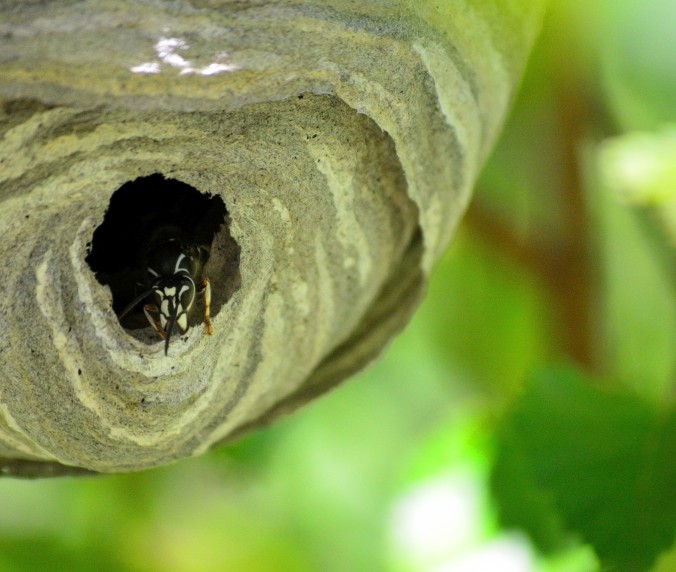
A bald-faced hornet nest is usually gray, papery, enclosed, and rounded or football-shaped. Early in the season, the nest may be around the size of a softball. As the colony grows, it may become the size of a football, basketball, or even larger. Some mature nests can become extremely large by late summer or early fall.
Bald-faced hornet nests are commonly found:
One of the easiest ways to identify an active bald-faced hornet nest is to watch from a safe distance during daylight hours. If you see large black-and-white hornets flying in and out of a gray paper nest, the nest is active.
Do not walk up to the nest. Do not shake the branch. Do not spray it yourself. Do not try to knock it down.
Call Animal Remover at 513-324-9453.
Many bald-faced hornet nests are found in trees, but they are also commonly found on structures. A nest may be attached to siding, a roof peak, soffit, eave, porch ceiling, garage, barn, commercial building, or exterior wall.
This becomes especially urgent when the nest is near:
A nest on a business can create problems for customers, employees, tenants, vendors, and maintenance staff. A nest on a home can make it difficult to use parts of the yard or safely enter and exit the property.
Animal Remover removes bald-faced hornet nests from both residential and commercial properties.
Bald-faced hornets do not have a barbed stinger like honeybees. Because of that, they can sting repeatedly.
This is one of the main reasons bald-faced hornet nests should be handled professionally. If the nest is disturbed, multiple hornets may come out to defend it. That can lead to multiple stings in a short amount of time.
Animal Remover is not a medical provider, and this page is not medical advice. If you have been stung and experience difficulty breathing, swelling of the face or throat, chest pain, dizziness, nausea, hives, weakness, or any other serious symptoms, seek medical attention immediately or call emergency services.
If someone has been stung multiple times, has a known allergy, or is showing any concerning symptoms, do not wait.
Bald-faced hornet nests usually start small and grow throughout the warm season. Early in the year, the queen begins building the nest and raising the first workers. Once workers are active, they expand the nest and help grow the colony.
By late summer and early fall, the nest may be much larger and contain many more hornets. This is often when property owners finally notice the nest because the activity becomes more obvious, the nest becomes more visible, or the leaves begin to thin.
A nest that seemed small or hidden earlier in the year can become a large, active, highly defensive colony later in the season.
That is why it is better to address the nest as soon as you find it.
Bald-faced hornets are predatory insects. They hunt other insects and feed protein-rich prey to their developing larvae.
They may feed on:
Later in the season, bald-faced hornets may also be attracted to sweet foods and liquids. This can include fruit, nectar, sugary drinks, trash cans, outdoor eating areas, spilled soda, and other food sources around homes and businesses.
In nature, bald-faced hornets can be beneficial because they help control other insect populations. But when their nest is close to people, pets, homes, businesses, play areas, or walkways, the risk often outweighs the benefit.
Bald-faced hornets may not bother people when they are away from the nest and simply flying around. The problem is the nest itself.
When the colony feels threatened, bald-faced hornets can defend the nest aggressively. Activities that may trigger them include:
If you know where the nest is, keep people and pets away from that area until it has been professionally handled.
Bald-faced hornet nests are often located high in trees or high on structures. This makes removal dangerous for homeowners and property managers who try to handle the nest themselves.
A high nest can create two risks at the same time: defensive hornets and fall danger.
Do not try to remove a high hornet nest with:
Animal Remover has the equipment and experience to remove high bald-faced hornet nests from trees, rooflines, eaves, structures, garages, commercial buildings, and other difficult locations.
Whether the nest is low, high, hidden, massive, or hard to reach, call 513-324-9453.
Every hornet nest removal is different depending on the location, height, size, activity level, and surrounding property conditions. Animal Remover uses a practical, safety-focused process to remove bald-faced hornet nests.
Step 1: Identify the Insect
The first step is confirming that the insects are bald-faced hornets.
Many people use the words bees, wasps, hornets, and yellow jackets interchangeably, but each type of stinging insect may require a different approach.
Bald-faced hornets are usually larger than yellow jackets and have distinct black-and-white markings. Their nests are usually gray, papery, enclosed, and often suspended above ground.
Correct identification matters because honeybees, yellow jackets, and bald-faced hornets are handled differently.
Step 2: Locate the Nest
Next, Animal Remover locates the nest and evaluates the surrounding area.
We look at:
This inspection helps us plan the safest and most effective removal.
Step 3: Establish a Safe Work Area
Bald-faced hornet nests can be dangerous when disturbed. Before treatment or removal, Animal Remover establishes a safe work area.
This may involve keeping people, pets, tenants, employees, customers, and bystanders away from the nest location while the service is being performed.
If the nest is near a business entrance, sidewalk, patio, outdoor seating area, school, playground, or high-traffic location, controlling the surrounding area is especially important.
Step 4: Treat the Active Nest
Bald-faced hornets are not relocated. Unlike honeybees, bald-faced hornets are treated and eliminated when they pose a risk near people, pets, homes, businesses, or public areas.
Animal Remover treats the active nest to eliminate the colony. The exact treatment method depends on the nest location, height, activity level, and surrounding conditions.
The goal is to stop the hornet activity and make the nest safe to remove when removal is appropriate.
Step 5: Remove the Nest When Appropriate
After the nest has been treated and the activity has been controlled, Animal Remover can remove the nest when appropriate.
Nest removal may be recommended when the nest is:
Some nests are high in trees or in areas where physical removal may not always be necessary after treatment, but many customers prefer the nest to be removed for peace of mind.
Step 6: Clean Up the Nest Area
Once the nest is removed, Animal Remover can help clean up the immediate area as needed. If the nest was attached to a structure, we may inspect the attachment point and surrounding area.
If hornets were entering a gap or void in a structure, we may recommend additional sealing or exclusion work to reduce future pest entry.
Step 7: Discuss Prevention and Recurring Service
Some properties have recurring stinging insect pressure year after year. This can happen around wooded lots, large landscapes, commercial buildings, barns, farms, outdoor dining areas, dumpsters, rooflines, soffits, and properties with many potential nesting sites.
Animal Remover can provide recurring stinging insect treatments when needed.
Recurring service may help reduce hornet, wasp, and yellow jacket activity around:
Animal Remover provides humane honeybee relocation whenever possible, but bald-faced hornets are not relocated.
Bald-faced hornets can create a significant sting risk when they are nesting near homes, businesses, children, pets, customers, employees, or public areas. When we remove a bald-faced hornet nest, the colony is treated and eliminated.
If you are looking for live honeybee removal, visit our Honeybee Extraction and Honeybee Colony Removal Process page.
If you have a large gray hornet nest, call 513-324-9453 for bald-faced hornet nest removal.
Bald-faced hornet nests are generally seasonal. Toward the end of the season, the colony produces new queens. Those queens leave, overwinter in protected locations, and can start new nests the following year. The old nest is usually not reused.
However, waiting is not always a good idea.
You should not wait if the nest is near:
Even if the old nest may eventually die out, the active colony can continue to create a sting risk while it is alive. Waiting can also allow the colony to grow larger and produce new queens before the end of the season.
Taking care of the nest now helps reduce immediate risk and may help reduce future activity around the property.
Bald-faced hornets typically do not reuse the same nest the next year. Each season, new queens start new colonies and build new nests.
That does not mean the same property cannot have hornet problems again. If your property has ideal nesting areas, mature trees, shrubs, rooflines, eaves, sheds, barns, or recurring insect activity, new nests can appear in future seasons.
This is why inspection, prevention, and recurring service can be helpful for some properties.
Knocking down an active bald-faced hornet nest can be extremely dangerous.
If the nest is disturbed, hornets may exit quickly and defend the colony. Because bald-faced hornets can sting repeatedly, a person trying to knock down a nest may be stung multiple times.
This is especially dangerous if the person is:
Do not attempt to knock down an active nest yourself. Call Animal Remover at 513-324-9453.
Store-bought sprays may seem like a simple solution, but they can create serious risk.
DIY spraying can fail when:
Professional hornet nest removal is safer and more complete, especially for large nests, high nests, nests on structures, and nests near human activity.
Call Animal Remover at 513-324-9453 if you notice:
If you are not sure whether the nest belongs to bald-faced hornets, Animal Remover can inspect and identify the problem.
Animal Remover removes bald-faced hornet nests from homes and residential properties throughout Cincinnati and surrounding areas.
We remove nests from:
A hornet nest near your home can make it difficult to use your yard safely. If the nest is near your family, pets, or daily activity, it should be removed quickly.
Animal Remover also removes bald-faced hornet nests from commercial properties.
We help:
A hornet nest near a customer entrance, outdoor seating area, employee break area, loading dock, dumpster, sidewalk, or parking lot can create safety and liability concerns.
Animal Remover provides fast service to help reduce disruption and restore safer access to the property.
Bald-faced hornets and yellow jackets are related, but their nests and behavior are often different.
Bald-faced hornets usually build large gray paper nests above ground. These nests are often found in trees, shrubs, rooflines, and on structures.
Yellow jackets are often found nesting in the ground or inside wall voids, soffits, and structural cavities. Yellow jacket nests are often hidden, and people may not know the nest is there until they see insects entering a hole or until someone gets stung.
Animal Remover handles both types of stinging insects, but the approach can be different.
For yellow jacket nest removal, visit our Yellow Jacket Removal in Cincinnati page.
Bald-faced hornets are not handled the same way as honeybees.
Honeybees are important pollinators and are often removed alive and relocated whenever possible. Honeybee colonies inside structures usually require extraction, comb removal, brood preservation, honey removal, cleaning, sealing, and relocation.
Bald-faced hornets are not relocated. They are treated and eliminated when they pose a risk near people, pets, homes, businesses, or public areas.
For live honeybee removal and structural bee extraction, visit our Honeybee Extraction and Honeybee Colony Removal Process page.
Until Animal Remover arrives, use caution.
Do not approach the nest. Do not spray the nest yourself. Do not knock it down. Do not throw anything at it. Do not spray it with a hose. Do not use fire, smoke, gasoline, or home remedies. Do not place a ladder near the nest. Keep children and pets away from the area.
If the nest is near a business entrance or public area, keep people away from the nest location until it has been handled.
If someone has been stung and has serious symptoms, seek medical attention immediately.
Animal Remover provides bald-faced hornet nest removal throughout Cincinnati and nearby communities.
We remove hornet nests from homes, businesses, trees, rooflines, garages, sheds, barns, commercial buildings, apartment communities, and outdoor areas where hornets are creating a safety concern.
Call 513-324-9453 for fast service.
For more stinging insect information, visit our related pages:
Call Animal Remover for Bald-Faced Hornet Nest Removal: 513-324-9453
Do not wait for a bald-faced hornet nest to get larger, more active, or more dangerous.
If you have a gray paper nest in a tree, shrub, roofline, soffit, eave, garage, shed, business, or other structure, Animal Remover can help.
Call 513-324-9453 now for fast bald-faced hornet nest removal in Cincinnati and surrounding areas.
A bald-faced hornet nest is usually gray, papery, enclosed, and rounded or football-shaped. It may start small early in the season and grow to the size of a football, basketball, or larger.
Bald-faced hornets often build nests in trees, shrubs, bushes, rooflines, eaves, soffits, garages, sheds, barns, and on the sides of homes or businesses.
An active nest usually has hornets flying in and out during daylight hours. Watch from a safe distance only. Do not approach the nest.
Bald-faced hornets are defensive around their nest. They may not bother people when they are away from the nest, but they can defend the colony aggressively if the nest is disturbed.
Yes. Bald-faced hornets do not have a barbed stinger like honeybees, so they can sting repeatedly.
No. Active bald-faced hornet nests can be dangerous, especially if the nest is high, large, hidden, or near people. Call Animal Remover at 513-324-9453.
Yes. Animal Remover removes hornet nests from high trees, rooflines, eaves, structures, and other difficult locations.
Yes. Animal Remover provides commercial bald-faced hornet nest removal for businesses, apartment communities, property managers, schools, churches, restaurants, warehouses, and other properties.
Bald-faced hornets typically do not reuse old nests. However, new queens can start new nests on the same property in future seasons if the conditions are favorable.
Bald-faced hornet colonies are seasonal. The old colony usually dies out when cold weather arrives, while new queens overwinter in protected areas and may start new nests the following year. If the nest is active and near people, waiting for winter may not be safe.
No. Animal Remover does not relocate bald-faced hornets. Honeybees may be relocated when possible, but bald-faced hornets are treated and eliminated when they pose a safety risk.
Animal Remover is not a medical provider. If someone has been stung and has trouble breathing, swelling of the face or throat, chest pain, dizziness, nausea, hives, weakness, or other serious symptoms, seek medical attention immediately or call emergency services.

 Animal Remover Wildlife Management and Pest Control