When stinging insects show up around your home, business, yard, roofline, wall, tree, playground, deck, shed, or parking area, speed matters. Animal Remover provides fast stinging insect removal, treatment, extraction, cutout, and ongoing prevention throughout Cincinnati and surrounding areas.
When stinging insects show up around your home, business, yard, roofline, wall, tree, playground, deck, shed, or parking area, speed matters. A visible nest can turn a normal day into a safety concern fast, especially when hornets, yellow jackets, or honeybees are flying near doors, walkways, patios, children, pets, customers, employees, or high-traffic areas.
Animal Remover provides fast stinging insect removal, treatment, extraction, cutout, and ongoing prevention services throughout Cincinnati and the surrounding areas. We handle active nests, hidden nests, high nests, wall void nests, ground nests, open-air honeybee colonies, abandoned hives, and recurring stinging insect problems.
Call 513-324-9453 now for rapid stinging insect service in Greater Cincinnati.
If you are seeing a lot of flying activity in one area, do not wait for the nest to get larger or for someone to get stung. Stinging insects can become defensive when their nest is disturbed, when a mower passes over a ground nest, when someone bumps a bush or tree, when children or pets get too close, or when the nest is located near daily activity.
Animal Remover responds quickly because we understand that most stinging insect calls are urgent. You may have hornets flying from a large gray nest in a tree. You may have yellow jackets entering a hole in the ground. You may hear buzzing inside a wall. You may see honeybees moving in and out of a gap in your siding, soffit, roofline, or brick. You may have a nest too high to reach, too close to a doorway, or too active to safely approach.
We can help identify the insect, determine whether treatment, removal, extraction, or a cutout is needed, and take care of the issue safely and efficiently.
No nest is too high. No job is too big or too small.
Animal Remover provides stinging insect services for residential and commercial properties throughout Cincinnati and nearby communities.
We handle:
For more detailed information, visit our related service pages:
A stinging insect nest is not just an inconvenience. It can create a real safety issue around your property. Hornets and yellow jackets may defend their nest aggressively when they feel threatened, and many wasps can sting more than once.
A nest near a door, sidewalk, driveway, deck, pool, playground, mailbox, business entrance, outdoor seating area, or employee work area can quickly become a problem.
Animal Remover is not a medical provider, and this page is not medical advice. If you have been stung, especially if you were stung multiple times, have a known allergy, experience difficulty breathing, chest pain, swelling of the face or throat, dizziness, nausea, hives, or any other concerning symptoms, seek medical attention right away or call emergency services.
Even when a sting does not cause a severe reaction, the nest should still be addressed quickly if it is near people, pets, customers, workers, or frequently used areas.
When you call Animal Remover at 513-324-9453, we focus on getting the right information quickly so we can respond appropriately.
We may ask:
These details help us determine whether you need nest treatment, physical removal, a structural cutout, a honeybee extraction, or recurring service.
We provide fast scheduling for urgent stinging insect situations. Active nests near living spaces, entrances, commercial areas, schools, playgrounds, pets, and customer-facing locations should be handled as quickly as possible.
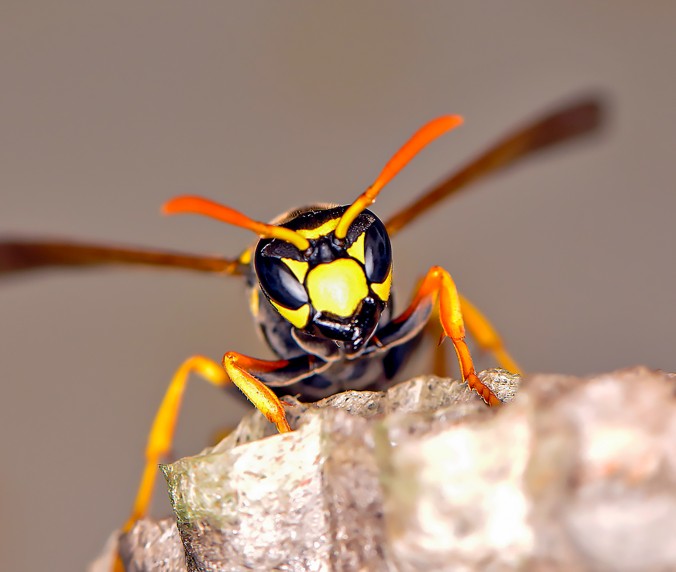
Bald-faced hornets are one of the most common hornet problems homeowners and businesses notice in the Cincinnati area. They are larger than yellow jackets, have bold black-and-white markings, and are known for building large gray paper nests.
Technically, bald-faced hornets are a type of wasp, but most people identify them as hornets because of their size, their nest shape, and their defensive behavior around the colony.
A bald-faced hornet nest is usually large, gray, papery, and enclosed. Early in the season, the nest may be around the size of a softball. As the colony grows, the nest can become the size of a football, basketball, or even as large as two basketballs.
Bald-faced hornet nests are often found:
One of the main ways to identify bald-faced hornets is by their larger size compared to yellow jackets and many other wasps. Another common sign is repeated flight in and out of the nest during daylight hours.
If you see hornets flying in and out of a large gray nest, do not approach it, shake it, spray it, knock it down, or try to remove it yourself. Call Animal Remover at 513-324-9453.
Bald-faced hornets do not have a barbed stinger like honeybees. This means they can sting over and over again.
If the nest is disturbed, multiple hornets may exit the nest and defend it. This is one reason professional hornet nest removal is important, especially when the nest is high, large, hidden, or close to people.
Bald-faced hornets are predatory insects. They hunt other insects and feed protein-rich prey to their developing larvae. They may feed on flies, caterpillars, soft-bodied insects, other wasps, and other small insects.
Later in the season, they may also be attracted to sweet foods, sugary drinks, fruit, nectar, garbage, outdoor eating areas, and other food sources around homes and businesses.
While bald-faced hornets can be beneficial in nature because they feed on other insects, a nest near your home, business, patio, deck, playground, or walkway is a safety concern. When a hornet nest is close to human activity, removal or treatment is usually the best option.
Many hornet nests are located high in trees, above rooflines, under eaves, or in other difficult-to-reach places. Do not try to reach a high hornet nest with a ladder, pole, hose, aerosol spray, or improvised equipment. That can trigger defensive hornets and create a serious fall hazard at the same time.
Animal Remover has the tools, equipment, and experience to handle high hornet nests, difficult nest locations, and active nests on homes, businesses, trees, and structures.
Whether the nest is low, high, hidden, obvious, small, or massive, we can help.
For more information, visit our Hornet Nest Removal in Cincinnati page.
Yellow jackets are one of the most urgent stinging insect problems we handle because their nests are often hidden. Many people do not realize they have a yellow jacket nest until someone gets stung while mowing, trimming bushes, walking across the yard, working near siding, or sitting near an entry point.
In Cincinnati and surrounding areas, yellow jackets may nest in the ground or inside structures. Two common types are Eastern yellow jackets and German yellow jackets.
Eastern yellow jackets are commonly associated with ground nests. They may use abandoned rodent burrows, hollow spaces under landscape timbers, gaps under rocks, voids near tree roots, or other underground cavities.
The entrance may look like a small hole in the ground with insects flying in and out. Sometimes the entrance is hidden by grass, mulch, leaves, shrubs, or landscaping.
Ground-nesting yellow jackets can be extremely easy to disturb by accident. Lawn mowing, weed eating, raking, landscaping, children playing, dogs digging, or simply walking too close to the entrance can trigger the colony.
German yellow jackets are commonly known for nesting inside structures. They may build nests in:
If you see yellow jackets repeatedly flying into a hole in siding, brick, soffit, roofline, foundation gaps, or trim, there may be a nest inside the structure.
A yellow jacket nest inside a wall or structural void should not always be handled with treatment alone. In many cases, especially when the nest is large or located in a sensitive area, a cutout may be the best option.
When a yellow jacket colony dies inside a wall, the nest can leave behind organic material. That can include dead adult yellow jackets, larvae, pupae, eggs, nest material, and moisture. Collectively, this material can weigh several pounds.
Like any organic matter left inside a wall, it can create odor problems as it breaks down. It can smell similar to a dead animal inside the structure.
Yellow jacket nests can also contain a lot of moisture. That moisture may affect drywall, insulation, wood, or nearby building materials. In some cases, yellow jackets may chew at drywall until it becomes almost paper thin. If they continue chewing, they may eventually break through into the living space.
That is why Animal Remover provides yellow jacket cutout services when appropriate. A cutout allows us to access the nest, remove the nest material, remove dead insects and developing brood, and help reduce the risk of odor, moisture problems, and continued indoor activity.
If yellow jackets are entering a wall, siding gap, soffit, or exterior opening, do not seal the opening while the colony is active. Sealing the outside entrance can trap the yellow jackets inside the structure.
When that happens, they may search for another exit and can end up inside the home or business.
Call Animal Remover first at 513-324-9453. We can evaluate whether the colony should be treated, removed, cut out, or handled with a more complete structural plan.
Yellow jacket colonies are typically seasonal. Toward the end of the season, the colony produces new queens. Those queens leave, overwinter, and can start new nests the following spring.
The original nest usually dies out at the end of the season, but ignoring an active nest can allow the colony to produce future queens before the season ends. One untreated nest can contribute to multiple new nests in the future.
Taking care of the nest now helps reduce the risk, urgency, and spread of activity around your property.
For more information, visit our Yellow Jacket Removal in Cincinnati page.
Honeybees are different from hornets and yellow jackets. Honeybees are important pollinators, and they should not be treated like a typical stinging insect pest unless there is a very specific situation that has been evaluated by a professional.
Animal Remover focuses on humane honeybee removal, live extraction, and relocation whenever possible. We do not approach honeybee colonies the same way we approach hornets or yellow jackets.
A typical honeybee colony can contain tens of thousands of bees. Many colonies contain roughly 30,000 to 50,000 honeybees.
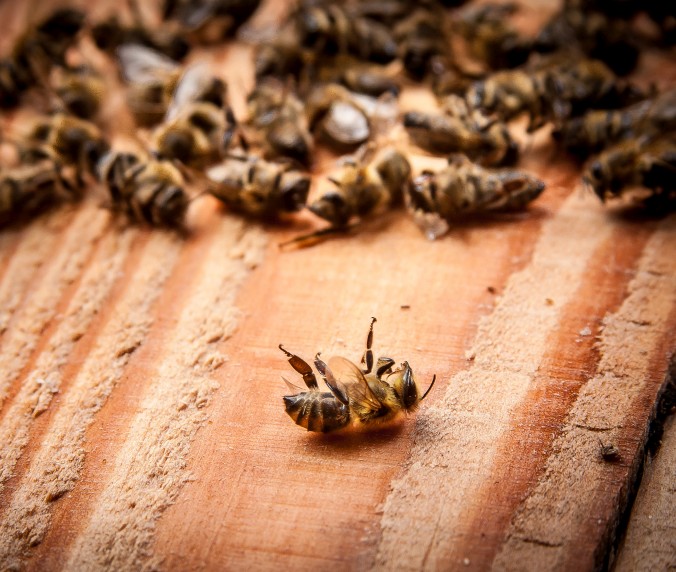
If a honeybee colony is inside a wall and is treated with insecticide without removing the colony, the result can be a major problem. Dead bees, honeycomb, brood, wax, pollen, and stored honey can remain inside the wall.
That material can create odor, attract secondary pests, leak, ferment, stain drywall, and cause cleanup issues.
A dead honeybee colony inside a wall can smell like a dead animal. In some situations, the mass of dead bees and hive material may be comparable to a 10- to 15-pound animal decomposing inside the structure. The odor can linger for weeks or months depending on the size of the colony, wall cavity conditions, temperature, moisture, and ventilation.
That is why honeybee removal usually requires a cutout, not just treatment.
When honeybees are nesting inside a structure, Animal Remover typically performs a cutout. A honeybee cutout involves opening the affected area, locating the colony, removing the bees, removing the comb, removing brood and honey stores, and preparing the area so it can be repaired and sealed.
Honeybee cutouts may be needed in:
The goal is not just to remove the bees. The goal is to remove the entire hive system so the structure is not left with honey, wax, brood, dead bees, odor, moisture, or future pest attraction.
Sometimes honeybees build what we call an open-air nest. Instead of nesting inside a wall, tree cavity, or structural void, the colony may hang openly from a tree, branch, fence, or the side of a building.
Animal Remover removes open-air honeybee nests as well. When possible, we remove and relocate the bees humanely.
Animal Remover also removes unwanted beehives, especially abandoned hives that are causing problems for nearby properties.
An abandoned hive can attract robbing bees, wax moths, beetles, ants, rodents, and other pests. It can also create conflicts between neighbors if bees are becoming a nuisance or if hive material is deteriorating.
If you have an unwanted, unmanaged, abandoned, or problematic hive, call Animal Remover at 513-324-9453. We can evaluate the situation and determine the safest removal option.
For more information, visit our Honeybee Removal in Cincinnati page. For the full structural extraction process, see our Honeybee Extraction and Colony Removal Process page.
Animal Remover relocates honeybees whenever possible because honeybees are valuable pollinators and can often be saved through live removal.
Hornets and yellow jackets are different.
We do not relocate bald-faced hornets, Eastern yellow jackets, German yellow jackets, or active wasp colonies. These insects can present a serious sting hazard when nesting near people, pets, homes, businesses, or public areas.
When we handle hornets and yellow jackets, the goal is treatment, elimination, nest removal when appropriate, and reducing the risk to the property.
Every stinging insect situation is different. The right service depends on the insect, nest location, size of the colony, structural conditions, safety risks, and whether the nest material needs to be physically removed.
Animal Remover provides:
Stinging Insect Treatment
Treatment may be appropriate for active hornet nests, ground yellow jacket nests, and certain exterior nests where elimination is the priority.
Physical Nest Removal
Visible nests may be removed after treatment when removal is safe and appropriate. This is common for bald-faced hornet nests, especially when the nest is attached to a home, business, tree, or structure.
Yellow Jacket Cutouts
When yellow jackets are nesting inside a wall, ceiling, soffit, or other void, a cutout may be needed to remove the nest material completely and prevent odor, moisture, and indoor breakthrough issues.
Honeybee Cutouts and Live Extraction
Honeybee colonies inside structures typically require a cutout to remove bees, comb, brood, wax, honey, and hive material. Animal Remover focuses on humane removal and relocation whenever possible.
Open-Air Honeybee Nest Removal
Open-air honeybee colonies can be removed from trees, buildings, fences, and other exposed locations.
Recurring Stinging Insect Treatments
Some properties deal with repeated stinging insect activity year after year. Animal Remover provides ongoing and recurring treatments for stinging insect prevention and control around homes, businesses, outdoor work areas, patios, decks, eaves, trash areas, fences, sheds, barns, and high-traffic zones.
Recurring service is especially helpful for commercial properties, outdoor dining areas, property managers, HOAs, schools, warehouses, parks, and homes with consistent wasp or yellow jacket pressure.
Stinging insects can nest in obvious places or hidden structural voids. Animal Remover commonly finds nests in:
If insects are flying in and out of the same location repeatedly, assume there may be a nest nearby.
Call Animal Remover at 513-324-9453 if you notice:
Do not try to wait it out when the nest is active and located near people. Fast professional service can prevent the problem from getting worse.
Animal Remover helps homeowners, landlords, property managers, businesses, schools, churches, restaurants, warehouses, offices, apartment communities, and commercial properties with urgent stinging insect issues.
We remove and treat stinging insects around homes, yards, garages, sheds, decks, patios, pools, playsets, fences, rooflines, walls, and attics.
We provide stinging insect control for businesses where speed and safety are critical. A nest near an entrance, dumpster, loading dock, employee area, outdoor seating space, or customer walkway can create liability concerns and disrupt operations.
We work with property managers, landlords, HOAs, and maintenance teams to respond quickly to tenant complaints and recurring nest issues.
Until Animal Remover arrives, use caution:
Again, Animal Remover is not a medical provider. For sting-related health concerns, contact a medical provider, urgent care, or emergency services.
Animal Remover provides stinging insect removal, hornet nest removal, yellow jacket treatment, yellow jacket cutouts, honeybee removal, honeybee extraction, and recurring stinging insect treatments throughout Cincinnati and nearby areas.
We serve Cincinnati and surrounding communities across Greater Cincinnati, including residential neighborhoods, commercial properties, rental properties, and outdoor spaces where stinging insects are creating a problem.
Call 513-324-9453 for fast service.
Do not wait for a stinging insect nest to get larger, more active, or more dangerous. Whether you are dealing with bald-faced hornets, Eastern yellow jackets, German yellow jackets, honeybees, a ground nest, a wall nest, a high nest, or recurring wasp activity, Animal Remover can help.
Call 513-324-9453 now for fast stinging insect removal in Cincinnati and surrounding areas.
The fastest way is to call Animal Remover at 513-324-9453 and describe the nest location, insect activity, and whether anyone has been stung. We use that information to prioritize the service and determine whether you need hornet nest removal, yellow jacket treatment, yellow jacket cutout, honeybee extraction, or recurring treatment.
Yes. Animal Remover removes hornet nests from high trees, rooflines, eaves, structures, and other difficult locations. Do not try to knock down or spray a high nest yourself. A ladder plus defensive hornets can be extremely dangerous.
Bald-faced hornets are usually larger than yellow jackets and are black with white markings. Their nests are often large, gray, enclosed, and papery. They commonly hang from trees, shrubs, or the sides of structures. Active nests usually have hornets flying in and out during daylight hours.
Yes. Bald-faced hornets do not have a barbed stinger, so they can sting repeatedly. If the nest is disturbed, multiple hornets may defend it.
Eastern yellow jackets often nest in the ground. German yellow jackets commonly nest in wall voids, attics, crawlspaces, soffits, and other enclosed structural spaces. Yellow jackets may also use hidden voids around homes and businesses.
A wall void yellow jacket nest may need a cutout because dead insects, larvae, pupae, eggs, nest material, and moisture can remain inside the wall after treatment. That material may create odor, moisture issues, secondary pest attraction, or drywall problems. A cutout allows the nest material to be removed completely.
No. Do not seal an active yellow jacket entry point until the colony has been properly handled. If you seal the outside entrance too soon, yellow jackets may chew or move into the living space.
No. Animal Remover does not relocate yellow jackets or hornets. These insects are treated and eliminated when they pose a risk near homes, businesses, people, pets, or public areas.
Yes, whenever possible. Honeybees are treated differently from hornets and yellow jackets. Animal Remover focuses on humane honeybee removal, live extraction, and relocation when the situation allows.
Usually, no. Honeybees inside a wall should generally be removed through a professional cutout. If a large colony is killed inside the wall, dead bees, brood, wax, honey, and comb can create odor, leaks, stains, fermentation, and secondary pest issues.
Honeybee colonies commonly contain tens of thousands of bees. Many colonies contain around 30,000 to 50,000 bees, and strong colonies may become even larger during peak season.
Yes. Animal Remover removes open-air honeybee nests from trees, buildings, fences, and other exposed areas. When possible, we remove and relocate the colony humanely.
Hornet and yellow jacket nests are generally seasonal, and the old nest usually dies out. However, colonies can produce new queens that overwinter and start new nests the following spring. Recurring service can help reduce repeated nesting around the same property.
Yes. Animal Remover provides recurring treatments for homes, businesses, outdoor dining areas, property managers, HOAs, warehouses, schools, and properties that deal with repeated stinging insect activity.
Call Animal Remover for Stinging Insect Removal: 513-324-9453

 Animal Remover Wildlife Management and Pest Control